ISSUED: 7 June 2023
MEDIA CONTACT: Dana Costa
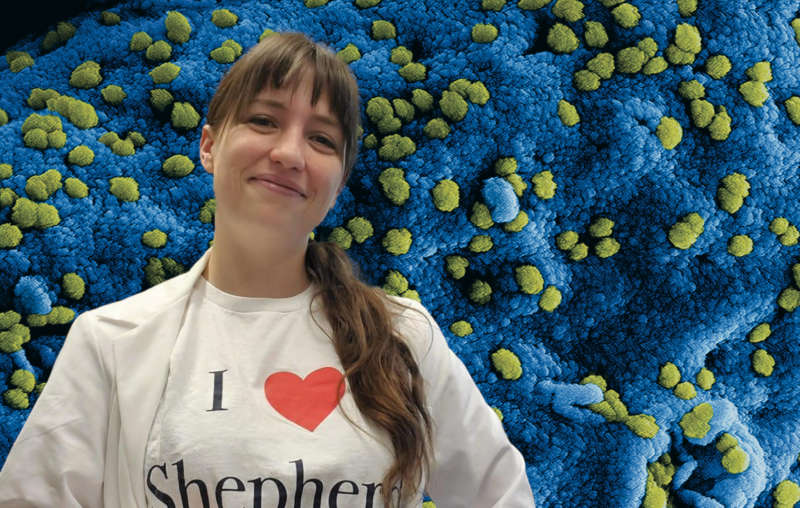
SHEPHERDSTOWN, WV — Shepherd University biology and microbiology students will have the opportunity to take a virology class this fall thanks to efforts by Dr. Sara Reynolds, assistant professor of biology.
 Reynolds received a $5,000 grant from the NASA West Virginia Space Grant Consortium College Course Development Grant Program to design the course. The University has dedicated another $5,000 for materials needed to run the class. The last time Shepherd offered a virology course was in the 2015-16 academic year.
Students in Reynolds’ fall class will familiarize themselves with existing virus research and study viruses in the laboratory.
“I’m going to obtain three different viruses—one for plants, one for bacteria, and one for animals, and the host cells for each,” Reynolds said. “So, the students will be able to have that matching laboratory experience to go with what they’re learning. Viruses are kind of cool and interesting, and they’re especially applicable right now.”
Reynolds pointed out that interest in virology is strong because of the COVID-19 pandemic and the fact that scientists are finding emerging and reemerging infections, many of which are viruses. There are also more cases of viruses being transmitted from animals to people.
“Especially as we destroy habitats, we come into more close contact with wild animals. That’s certainly how COVID probably emerged from bats, but this is true also with Ebola,” Reynolds said. “There are recent Ebola outbreaks in Africa. The world has become so globalized that we’re all very interconnected, so Ebola does not just show up in Africa for a short period of time, or one part of Africa, it can spread internationally.”
Reynolds said the ability of viruses to spread globally, along with the lack of antiviral medicine, makes virology an expanding and important career field. She plans to highlight to students a variety of jobs available in virology other than being a doctor.
“I want to expose them to careers that you need a virology background to do and are critical in dealing with viruses in our current world, but that maybe they hadn’t thought about—such as epidemiologist, technician, and researcher,” she said.
After its inaugural fall run, the virology class will be added to the rotation of electives offered by the biology department. Reynolds said the initial purchase of viruses is an investment that will sustain future classes and research projects.
“Once I have the virus strains, I can freeze them and I can grow them every year after that,” she said. “Some of these viruses and strains are completely suitable for student research. Once we have them, we can utilize them for other courses or in research to be able to engage more students. The impact of being able to secure that funding is going to spread out a lot farther than just one teaching laboratory.”
— 30 —