ISSUED: 3 October 2023
MEDIA CONTACT: Cecelia Mason
SHEPHERDSTOWN, WV — Dr. Sytil Murphy, associate professor of physics who teaches geographic information system (GIS) and unmanned aerial vehicle classes, gave a talk during the Eastern Panhandle GIS Users Group Meeting September 28. Seven Shepherd students attended the meeting, with four of them also giving presentations.
Murphy’s talk, “Further Investigation of the 2020 Derecho,” focused on her work looking at how the derecho that hit the Midwest in August of 2020 showed up in satellite imagery.
Victoria Nicholes, an environmental studies major from North Huntingdon, Pennsylvania, presented “Can we see island land area change between 1986-present on satellite imaging?”
Nicholes’ presentation focused on using satellite imagery to study changes between 1986-2023 in total land area and shape in the Breton National Wildlife Refuge and the Gulf Islands National Seashore, barrier islands in the Gulf of Mexico, and why it is important to pay attention to those changes and their causes.
Nicholes said she loved having the opportunity to present her GIS/remote sensing work.
“It was amazing to get to learn how GIS is being used every day around us and how many job opportunities there are in the field besides the classic ones you always hear about,” she said.
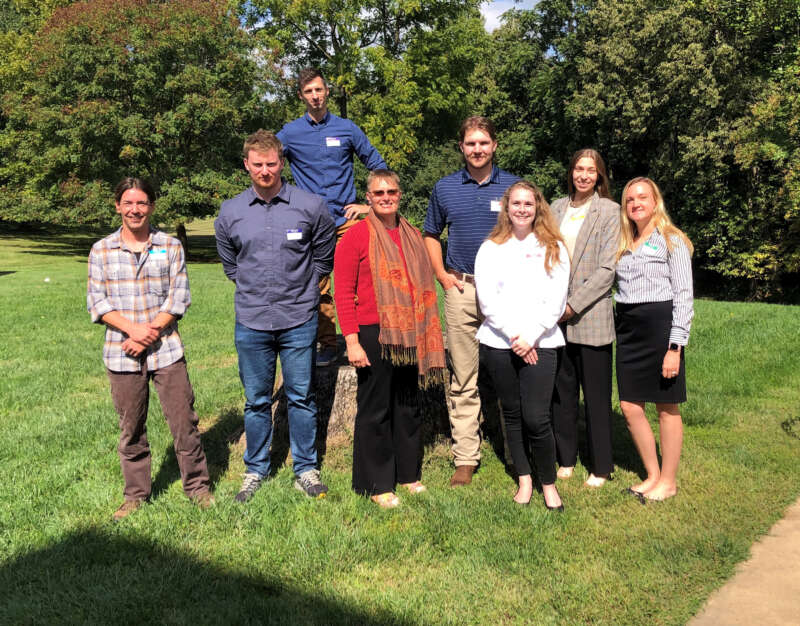
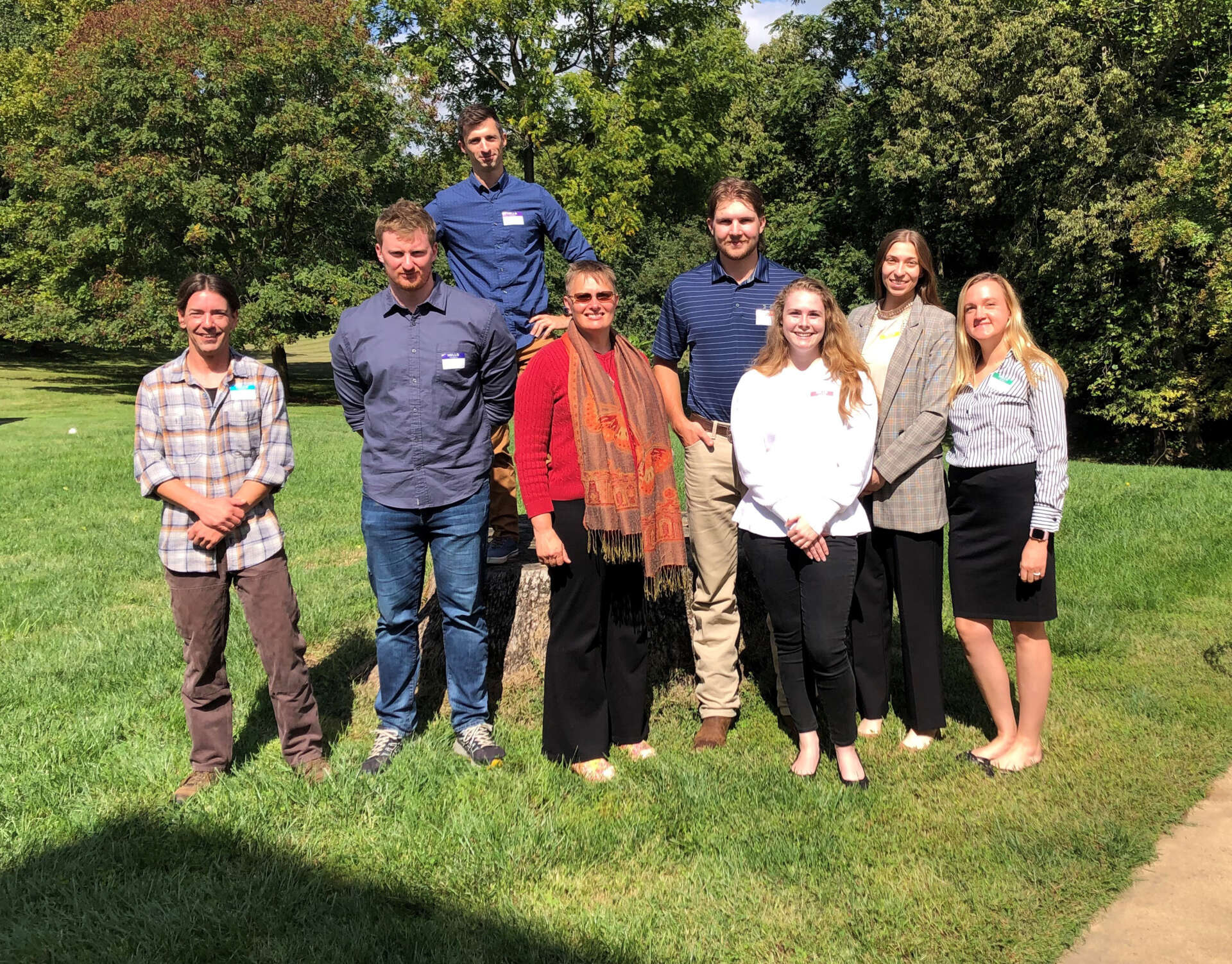 Pictured (l. to r.) are James Kitchen, Wesley Stamburgh, Marshall Shanaberger, Dr. Sytil Murphy, Nathan Mikulski, Shenandoah Ragle, Victoria Nicholes, and Marissa Mohn.
Wesley Stambaugh, an environmental studies major from Clearbrook, Virginia, presented “Using UAS to Identify Red Spruce in the Monongahela Forest.” He talked about determining if imagery from unmanned aircraft systems (UAS) can be used to locate Red Spruce trees in the Monongahela National Forest to help foresters reach their goal of restoring this historic habitat.
“The conference offered a massive networking opportunity while also showing how GIS is used at a professional level to enrich the lives of the local community,” Stambaugh said.
James Kitchen, an environmental studies major from Martinsburg, West Virginia, did a presentation titled “Burn Indices “ on using satellite imagery to derive burn indices to determine the general health and vigor of the plants in a landscape.
“We can use this data collected before and after a wildfire to determine the extent and the intensity of the fire,” said Kitchen, who called attending the conference a great experience.
“I was able to make contacts that will be useful after graduation as well as gain information on graduate opportunities in the field of geomatics,” Kitchen said. “I also enjoyed the opportunity to represent Shepherd and the environmental studies program—both a privilege and a pleasure—as well as the opportunity to employ my speaking skills.”
Shenandoah Ragle, a data analytics major, from Harpers Ferry, West Virginia, presented “Using Remote Sensing to Calculate Lake Surface Area.” She analyzed satellite imagery to observe and calculate the surface area loss of Lake Mead in Nevada and Arizona over a 40-year period. Lake Mead is a major source of water for western states and its shrinkage is concerning.
“I highly enjoyed the conference; it was an excellent networking opportunity, and I found it to have a diverse atmosphere that had elements of academic research as well as practical work experience,” Ragle said. “It was also very motivating to see and meet many successful women in a growing STEM field.”
Other students who attended the conference were environmental studies majors Marshall Shanaberger, Keedysville, Maryland and Marissa Mohn, Hagerstown, Maryland; and criminal justice major Nathan Mikulski, Bethlehem, Pennsylvania.
Shanaberger found attending the conference to be a valuable experience.
“I think it was an important meeting for students because our presentations and work are primarily focused on research,” he said. “Meanwhile, the other presenters are more focused on solutions to customer problems. Exposure to the demand for a job could be an innervating experience for a student looking at careers. It could solidify one’s resolution to finish a program seeing the level of thought and professionalism the other presenters are bringing to their work.”
— 30 —