ISSUED: 5 July 2023
MEDIA CONTACT: Dana Costa
SHEPHERDSTOWN, WV — Shepherd University’s School of Nursing has received a $2.6 million, four-year rural health advanced practice grant designed to increase the number of primary care family nurse practitioners and psychiatric mental health nurse practitioners in the region. The U.S. Department of Health and Human Services’ Health Resources and Services Administration grant will provide Shepherd $649,998 a year, about $417,000 of which will cover yearly tuition and fees for 30 graduate and certificate students.
“This grant will support nurse practitioners who are primary care providers in the region—and there is an inadequate number of providers at this point in time,” said Dr. Sharon Mailey, dean, College of Nursing, Education, and Health Sciences, and director, School of Nursing. “We have many specialists, but we don’t have sufficient numbers of individuals at the primary care level who are facilitating access into the healthcare system for patients who have the most vulnerable needs.”
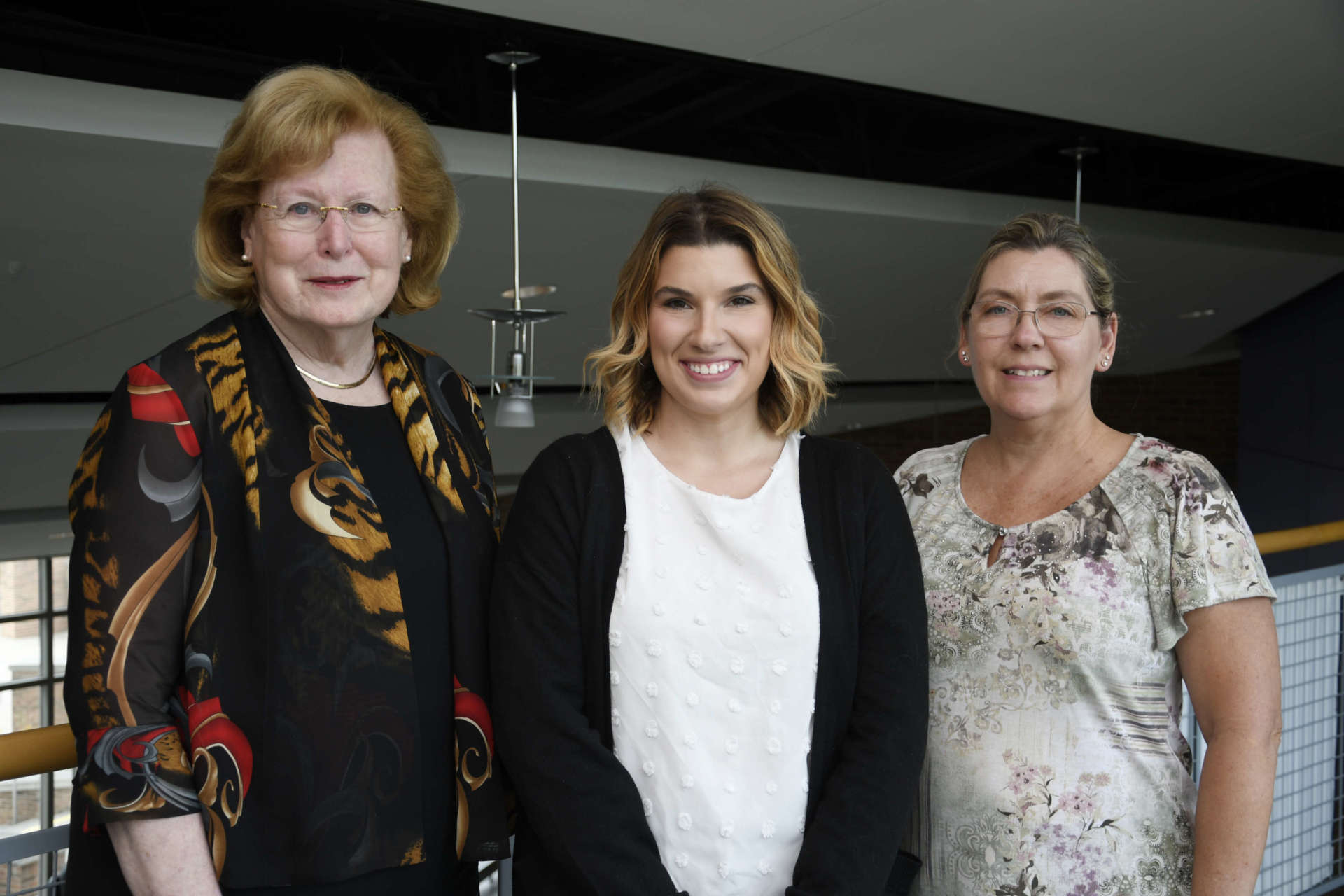
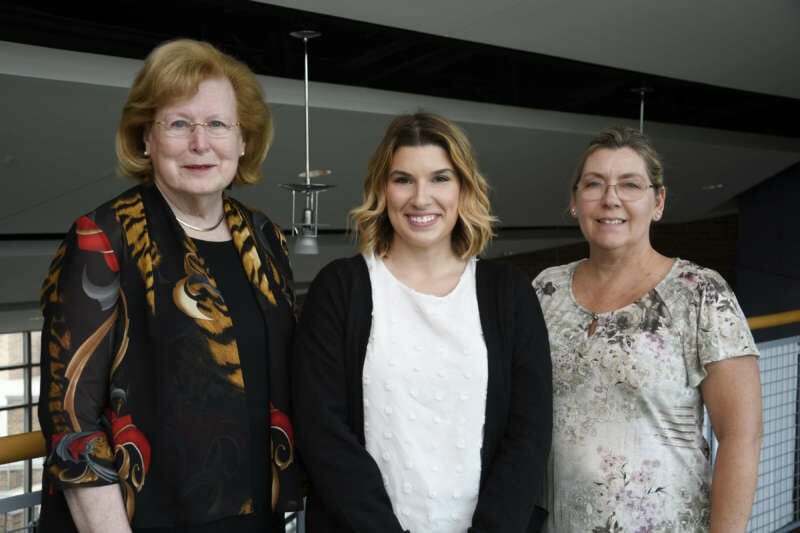
Pictured (l. to r.) are Dr. Sharon Mailey, dean, College of Nursing, Education, and Health Sciences, and director, School of Nursing; Kayla Landsberger, project coordinator; and Dr. Kelly Watson Huffer, associate professor of nursing education and grant project director.
Beginning in fall 2023, grant money will provide scholarships for students in the Doctor of Nursing Practice (DNP) program as well as programs offering post-graduate certificates for family nurse practitioners (FNP) and psychiatric mental health nurse practitioners (PMHMP).
“Doctoral education is expensive and time intensive. In addition, our students are working, and have families and other responsibilities,” said Dr. Kelly Watson Huffer, associate professor of nursing education and grant project director. “Taking the financial stress away is just one more thing to help them with their education.”
Huffer sees potential for growth particularly in the psychiatric mental health area because there’s a shortage of psychiatrists and waitlists for services.
“If you can be an FNP/PMHMP, it is ideal, because there is a backlog to refer your patients anywhere for mental health,” Huffer said. “There’s a six-month waitlist for most psychiatry and you have kids who need stimulant medication for ADHD and patients with depression and anxiety issues. If someone can serve in both roles in a primary care office, they are really facilitating getting their patients treated in a timely manner.”
The grant will help Shepherd DNP and certificate students gain practical rural health experience at four federally qualified health centers—Shenandoah Valley Medical Systems in Martinsburg, West Virginia; Tri-State Community Health Center, serving Morgan County, West Virginia, Washington and Allegheny counties, Maryland, and Fulton County, Pennsylvania; E.A. Hawse Health Center in Hardy County, West Virginia; and Mountaineer Community Health Center in Paw Paw, West Virginia.
Two mental health substance abuse disorder treatment centers will also participate—Jefferson Day Report Center, Inc. in Ranson, West Virginia, and Mountaineer Recovery Center in Kearneysville, West Virginia.
“Being able to support our students and West Virginia’s most vulnerable populations allows us to keep resources in our community,” said Kayla Landsberger, project coordinator.
“It’s all about improving healthcare in our region,” Mailey added. “Shepherd is serving this region and this program is dedicated to doing that.”
— 30 —